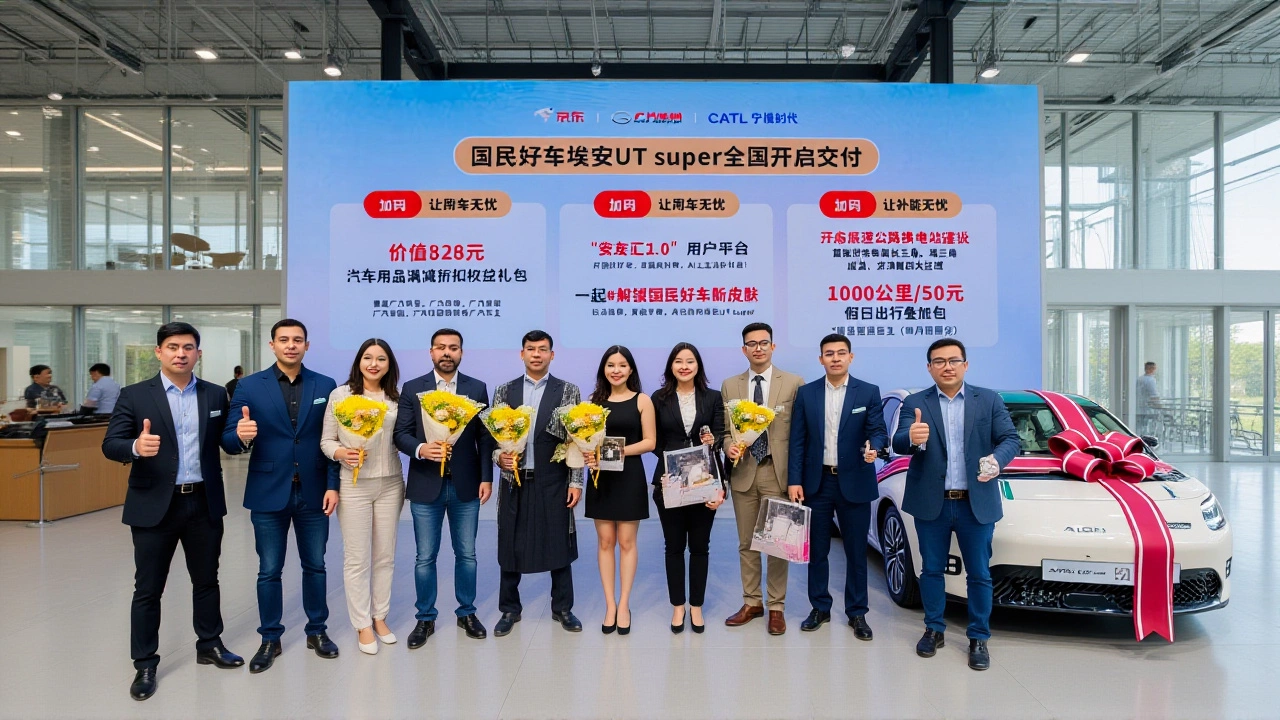
When customers rushed to buy the JD.com exclusive Aion UT Super in late November 2025, they expected a sleek, affordable electric car — not a legal gray zone. Within days of its November 25 launch, a wave of refund requests flooded the platform. The trigger? Hidden terms, misleading visuals, and bureaucratic roadblocks that turned a marketing triumph into a consumer backlash. What began as excitement over a ‘People’s Great Car’ with a starting price of just RMB 49,900 ($7,000) with battery leasing, quickly unraveled into a case study in digital-age deception.
Missing Sunroof, Broken Trust
It started with a sunroof. Promotional images on JD.com’s product page showed the Aion UT Super with a panoramic sunroof — a feature many buyers, like Ms. Luo from Chengdu, specifically chose the car for. But when her vehicle arrived, there was no sunroof. At all. JD.com’s customer service initially refused her refund, citing a ‘non-refundable once locked’ policy. She wasn’t alone. Dozens of others reported the same issue. The twist? Those sunroof images still lingered on the GAC Aion app, even after JD.com removed them. It took a week of social media outcry and persistent calls before JD.com finally apologized, blaming ‘outdated model information’ from the previous Aion UT. But Ms. Luo’s real complaint wasn’t just about the sunroof. ‘It wasn’t the feature,’ she said. ‘It was realizing they didn’t care enough to get the details right.’
The 3,000-Km Trap in Battery Rental
Then came the battery. The GAC Aion BaaS (Battery as a Service) plan advertised a flat RMB 399 ($55.86) monthly fee — no mention of a 3,000-kilometer cap. Drive more? Pay RMB 0.2 ($0.028) per extra kilometer. For urban commuters in Shanghai or Beijing, that’s fine. For someone driving 50 km daily to work and back? That’s 3,000 km in 60 days. For delivery drivers, parents shuttling kids, or rural residents with long commutes? It’s a trap. ‘They marketed it as affordable, then slapped on a hidden toll,’ said one Guangzhou-based Uber driver who canceled his order. JD.com later claimed the limit was ‘based on average private usage,’ covering 90% of households. But analysts note the policy may also stem from GAC Aion’s past involvement in ride-hailing fleets, where battery swapping was heavily used. The fine print? Now buried in the final checkout steps — after you’ve paid the deposit.
Invoice Restrictions Block Local Subsidies
But the deepest cut came with paperwork. Customers like Jiajia, from Jiangsu province, discovered that invoices for the Aion UT Super could only be issued in Shanghai or Guangzhou — not in their home provinces. That meant she couldn’t claim Jiangsu’s RMB 3,000 ($420) local purchase subsidy, which was higher than JD.com’s RMB 2,000 ($280) offer for battery leasing. ‘I bought it online, but I’m not allowed to get the money I’m legally entitled to?’ she asked. The issue wasn’t technical — it was jurisdictional. JD.com and GAC Aion had centralized invoice processing to simplify logistics, but ignored how provincial subsidies work. The result? At least 12% of buyers in provinces like Jiangsu, Zhejiang, and Sichuan reportedly canceled orders after realizing they’d lose hundreds in subsidies. Legal experts say this could violate China’s Consumer Rights Protection Law, which requires full disclosure of conditions affecting value.
Refunds? Only After a Fight
JD.com’s initial stance was firm: ‘Orders locked, no refunds.’ But as complaints exploded on Weibo and Xiaohongshu, the company quietly changed tactics. By December 3, refunds were being approved — but only after multiple customer service escalations, screenshots of misleading ads, and sometimes public pressure. ‘They made it feel like you were begging for your own money back,’ said one refund recipient. The company eventually updated its purchase page to include the 3,000-km limit and invoice restrictions — but only after the damage was done. Meanwhile, GAC Aion continues handling deliveries and after-sales, promising vehicles within two to four weeks of final payment. The first batch rolled out at the Guangzhou Auto Show on November 25, 2025.
Behind the Scenes: A Joint Venture with Hidden Friction
The Aion UT Super isn’t just another EV. It’s a three-way bet between JD.com, GAC Group’s electric arm GAC Aion, and CATL — the world’s largest battery maker. Launched on November 9, 2025, it was branded as the ‘People’s Great Car,’ with features like the GAC Huawei Cloud Car System, a 500km range, and a 14.6-inch touchscreen. The long-range version packs a 68kWh battery, fast-charges to 80% in 30 minutes, and even offers Level 2 driver assistance. Buyers get perks: 100 free Choco-Swap vouchers for JD Plus members, a 180-day price protection guarantee, and up to RMB 4,000 in subsidies. But the marketing machine moved faster than the operational one. The disconnect between sales promises and backend logistics exposed a fundamental flaw: digital retailers are great at selling, but terrible at managing complex physical goods with layered third-party terms.

What’s Next?
Regulators in China’s State Administration for Market Regulation are reportedly reviewing the case. If found guilty of misleading advertising, JD.com could face fines up to 10% of its China revenue from the past year. GAC Aion may need to overhaul its BaaS disclosures nationwide. For consumers? A warning: even ‘simple’ online purchases can come with hidden traps. And for JD.com? This isn’t just about one car. It’s about whether a tech giant can be trusted to sell complex, high-value physical products without cutting corners.
Frequently Asked Questions
Why can’t I get a refund for the Aion UT Super if the sunroof was missing?
Initially, JD.com refused refunds citing ‘non-refundable once locked’ policies. But after public pressure and legal scrutiny, refunds were approved for customers who could prove misleading advertising — like screenshots of sunroof images on JD.com’s site. Legal experts argue that if key features aren’t clearly disclosed, ‘no-refund’ clauses are unenforceable under China’s Consumer Rights Protection Law.
Is the 3,000-km monthly limit on battery rental legal?
The limit itself isn’t illegal, but failing to disclose it prominently during the purchase process is. Under Chinese law, material terms affecting cost — like per-kilometer overage fees — must be clearly displayed before payment. JD.com only added the limit after customer complaints, which regulators may view as retroactive compliance, not good faith disclosure.
Why are invoices only issued in Shanghai and Guangzhou?
This appears to be a logistical decision by JD.com and GAC Aion to centralize tax documentation. But it directly blocks buyers in other provinces from claiming local subsidies — like Jiangsu’s RMB 3,000 offer — which are tied to local invoice issuance. This violates the spirit of provincial incentive programs and may constitute discriminatory pricing under consumer protection guidelines.
How does this affect future EV sales on JD.com?
Consumer trust has taken a hit. While JD.com dominates e-commerce, selling complex products like cars requires transparency. This incident may push buyers toward traditional dealerships or brands like BYD and NIO, which handle sales and subsidies directly. JD.com’s reputation as a reliable seller of high-value goods is now under scrutiny — especially for products with third-party service contracts.
What’s the difference between the Aion UT and Aion UT Super?
The Aion UT Super, launched November 9, 2025, is a newer model with upgraded tech: GAC Huawei Cloud Car System, Cylinder Battery 2.0, and a 510km CLTC range. The original UT had a 430km range and lacked the 14.6-inch central screen. But the confusion between models led to misleading ads — with older UT images still appearing online, causing buyers to think they were getting the Super’s features.
Can I still buy the Aion UT Super and get the subsidy?
Yes — but only if you live in Shanghai or Guangzhou, where invoices are issued. Buyers elsewhere lose access to local subsidies unless they relocate paperwork. JD.com’s RMB 2,000–4,000 subsidy is still available, but it’s lower than what some provinces offer. Check your local government’s EV incentive portal before committing — don’t rely on JD.com’s page alone.
Leave a comments